



TELC 2026 Parallel Event “Energy Technology Innovation and Development Forum” Held in Taiyuan
Release Time:2026-09-07
On September 4, 2026, the “Energy Technology Innovation and Development Forum,” a parallel event of the 2026 Taiyuan Energy Low-carbon Development Forum (TELC 2026), was successfully held in Taiyuan. Co-hosted by the Shanxi Provincial Department of Science and Technology, the Shanxi Institute of Huairou Laboratory, and Shanxi Coking Coal Group Co., Ltd., the forum focused on AI empowerment, green electricity conversion, smart energy, and innovative carbon neutrality practices. Gathering top domestic intellectual resources, the forum explored new pathways for the green and low-carbon energy transition. Xu Chaofeng, Vice Governor of Shanxi Province, and Tang Guangfu, Director of the Huairou Laboratory, attended the forum and delivered opening remarks.
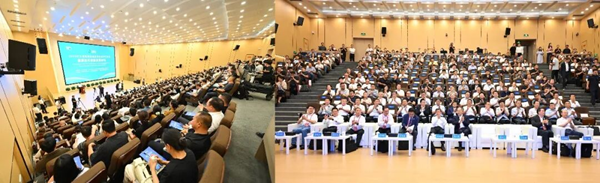
Over 300 participants attended the forum, including academicians and experts such as Bai Chunli, Xie Kechang, Peng Suping, Bao Xinhe, Ling Wen, Liu Zhongmin, Xu Chunming, Yang Chao, and Xu Tongwen; Wang Siqiang, President of the China Electric Power Construction Association; Sun Yuhan, President of the Shanxi Institute of Huairou Laboratory; relevant officials from various departments of Shanxi Province; research institutions including the Energy Research Institute of the NDRC and the Institute of Coal Chemistry, CAS; 11 universities including Shanghai Jiao Tong University and Fudan University; and representatives from over 100 enterprises, including China National Chemical Engineering Co., Ltd. and China Datang Corporation Ltd.
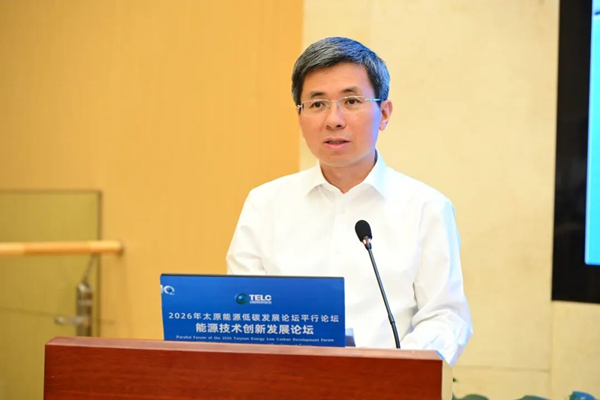
In his speech, Xu Chaofeng pointed out that Shanxi, as a national comprehensive energy base, has always attached great importance to energy technology innovation. The province has continuously made efforts in technological research, achievement transformation, and platform construction, striving to advance coal science and achieving remarkable results in energy technology innovation. Xu stated that Shanxi will focus on enhancing the overall effectiveness of its innovation system by tackling key technologies, promoting the commercialization of scientific achievements, and highlighting the primary role of enterprises in innovation, striving to build the province into a vital source of energy technology innovation and achievement transformation.
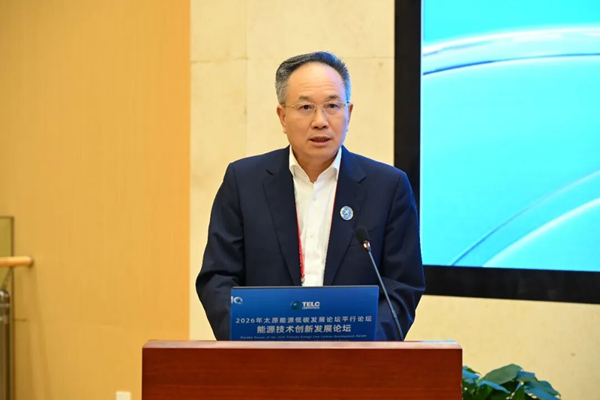
In his address, Tang Guangfu emphasized that the key to China's transition from a major energy country to a strong energy nation lies in scientific and technological innovation. As the first national pilot for comprehensive energy revolution, Shanxi possesses a solid foundation and unique advantages in leveraging energy technology innovation to drive energy transition and industrial upgrading. Tang stated that the Huairou Laboratory will fully leverage its strengths, address "national needs, industry bottlenecks, and Shanxi's aspirations," and strengthen basic research and core technological breakthroughs. The laboratory aims to closely integrate Shanxi's major application scenarios with its own technological breakthroughs, accelerate the formation of new quality productive forces in Shanxi's energy sector, and provide robust scientific and technological support for Shanxi's transformation and development as a major energy province.
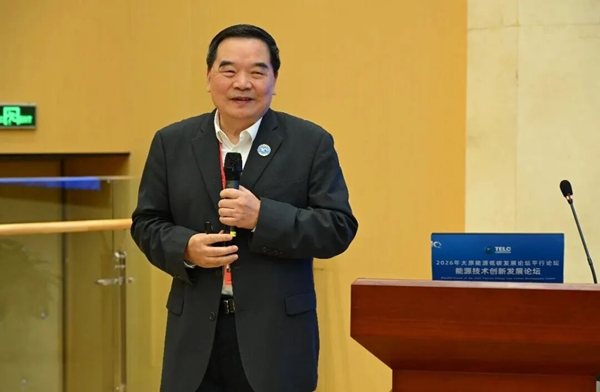
Bao pointed out that the underlying logic of the future green and low-carbon energy system is the shift from fossil fuel-driven to renewable electricity-driven models. Green fuels are a crucial component of China's new energy system, bearing the triple mission of replacing oil to ensure energy security, reducing carbon emissions to promote green development, and facilitating the non-electric utilization and consumption of new energy. Hydrogen serves as the "carrier" for renewable energy, with the key to green hydrogen production lying in breakthroughs in water electrolysis technology; medium- and high-temperature water electrolysis represents the future trend. Gray-to-green hydrogen substitution and green fuels are vital pathways for China's green hydrogen industry. Adhering to the principle of "establishing the new before abolishing the old" and multi-energy integration is the inevitable path for China's energy transition. Carbon-based fuels must first achieve low-carbon status before going green. Coupling coal chemical processes with green electricity will realize high-level electrification, while integration with renewable energy will achieve low water consumption and near-zero CO2 emissions. For amino fuels, the focus lies on technological innovation and cultivation, requiring solutions to key scientific issues such as highly efficient electro-thermally driven ammonia decomposition for hydrogen production and electrocatalytic reduction for ammonia synthesis.
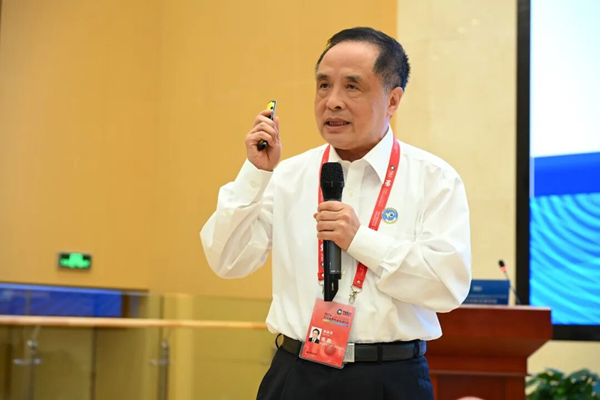
Peng systematically introduced the background, current status, and opportunities of hydrogen (pan-hydrogen) technology and industry, proposing forward-looking strategic ideas. The low-carbon utilization of high-carbon energy is the way to achieve the "dual carbon" goals. Accelerating the construction of China's new energy system requires deep integration between traditional and new energy. Hydrogen (pan-hydrogen) can act as a bridge among various energy sources, linking fossil and renewable energy to build a diversified clean energy supply system. China's hydrogen production must gradually transition from fossil fuels to renewable sources, urgently requiring breakthroughs in key materials, storage and transportation equipment, cost reduction, and scaling. Large-scale off-grid hydrogen production, reducing green hydrogen costs, and coupling with coal chemicals will be key directions for future technological development.
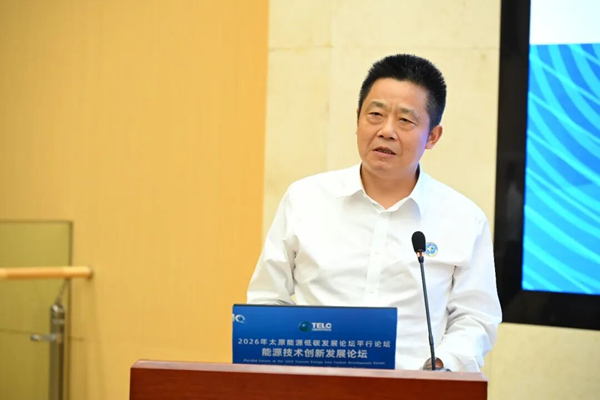
Focusing on energy structure transformation under the "dual carbon" goals, Xu elaborated on power-hydrogen synergy, green hydrogen cost reduction, water electrolysis technologies, and the industrialization of alkaline membranes. Under the "dual carbon" goals, the long-term value of green hydrogen lies in serving as an energy interface between new energy and industrial systems, driving the shift from "power consumption" to "power-hydrogen synergy." Continuous optimization of existing AEMs and further exploration of simpler membrane formation mechanisms and electrolyzer configurations are needed; ion solvation processes offer new possibilities for simplifying membrane preparation. Next-generation water electrolysis technologies require coordinated development around low cost, low power consumption, high efficiency, wide load adaptability, and long dynamic lifespan.
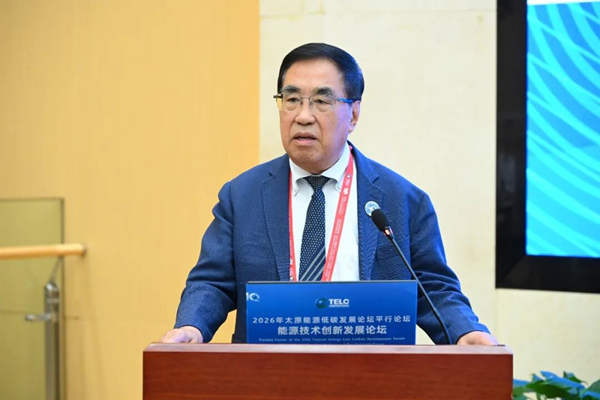
Xie profoundly revealed the pathways for transforming coal from a high-carbon resource into a carbon-based resource that can be utilized with low carbon emissions, directionally designed, and systematically evaluated under "dual carbon" constraints. The future of coal is not a simple phase-out, but an expansion from fuel value to raw material, material, and strategic carbon resource value under energy security and "dual carbon" constraints. Based on synergistic carbon reduction across five dimensions—source reduction, process reduction, coupling reduction, circular reduction, and terminal sequestration—and driven by the deep integration of coal science and AI, spatialized life-cycle carbon footprint assessments via GIS-LCA will enable systematic optimization from processes and supply chains to regional layouts. Ultimately, this will lead from re-understanding and precisely designing carbon to systematically optimizing it, providing vital strategic guidance for achieving the "dual carbon" goals.
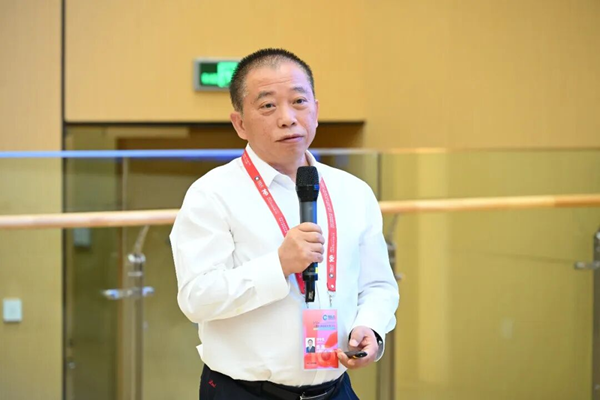
Liu pointed out that China's energy development faces three major challenges: a widening supply gap, severe energy security risks, and immense environmental pressure. He innovatively proposed four multi-energy integration technological pathways: 1) clean and efficient development, utilization, and coupled substitution of fossil energy; 2) multi-energy complementarity and large-scale application of renewable energy; 3) industrial reconstruction based on low-carbon and zero-carbon principles; and 4) low-carbon and intelligent multi-energy integration. Coal and petrochemical industries can achieve coordinated development and industrial upgrading through methanol coupling. He cited six demonstrated technologies, such as third-generation methanol-to-olefins and ethanol production from dimethyl ether via methyl acetate, as well as five technologies awaiting demonstration, such as coupling of naphtha and CO2 to produce aromatics and methanol-gasoline coupling to produce olefins. He also highlighted AI's immense potential to disrupt the traditional step-by-step scale-up chemical R&D paradigm, empowering chemical technology development and industrial growth.
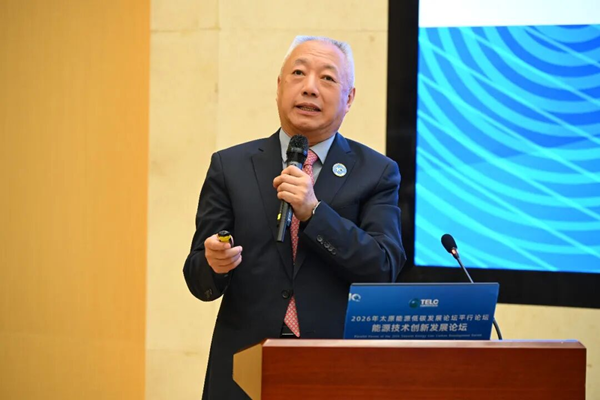
Grounded in national strategic needs, Ling profoundly analyzed the pain points and bottlenecks in current industrial digital and intelligent transformation. He proposed a new approach following "decentralized governance, multi-agent collaboration, human-machine co-governance, rule constraints, risk prevention and control, and demonstration promotion" to build an industrial multi-agent cross-domain collaborative governance system. This will drive enterprise organizations to transform towards "agent-participated execution, human-machine closed-loop control, dynamic task orchestration, and cross-functional real-time linkage." At the technical foundation level, it is necessary to consolidate heterogeneous computing, trusted industrial data spaces, and end-edge-cloud collaborative industrial large models. At the innovation ecosystem level, establishing standards and promoting evaluation-driven construction is needed to create a full-chain innovation ecosystem integrating industry, academia, research, application, and finance, and to build a high-level industrial communication matrix, injecting new momentum into the high-quality development of the manufacturing sector.
Attendees reached a consensus that hydrogen energy is a crucial pathway for accelerating the construction of a new energy system. Promoting the green and low-carbon energy transition requires both accelerating the construction of a multi-energy integrated technological system and deepening AI empowerment in energy technology innovation. This will drive the entire energy chain towards high-end, green, and intelligent upgrades across production, conversion, storage, transportation, and utilization. The forum showcased cutting-edge scientific and technological achievements in the energy and chemical sectors and built a platform for deep integration among government, industry, academia, research, and application. It is of great significance in promoting technology innovation to lead energy transition and industrial upgrading, building a new energy system, and serving the "dual carbon" goals.
